

Whether you’re experiencing a crisis or just dealing with the stress of day-to-day life, anyone can benefit from the special love of an emotional support animal (ESA). Because emotional support animals aren’t about labels — they’re simply about wellbeing. ESAs offer comfort, routine, companionship, and emotional grounding that benefits anyone seeking connection, calm, and care at home.
Shelter to Service provides a personal matching experience for applicants looking to adopt an emotional support cat or dog. Once an application has been submitted and reviewed, an appropriate cat or dog will be evaluated, selected, and matched with the applicant, helping to ensure that the emotional support animal is a good fit for both their home environment and therapeutic goals.
Available ESA Candidates
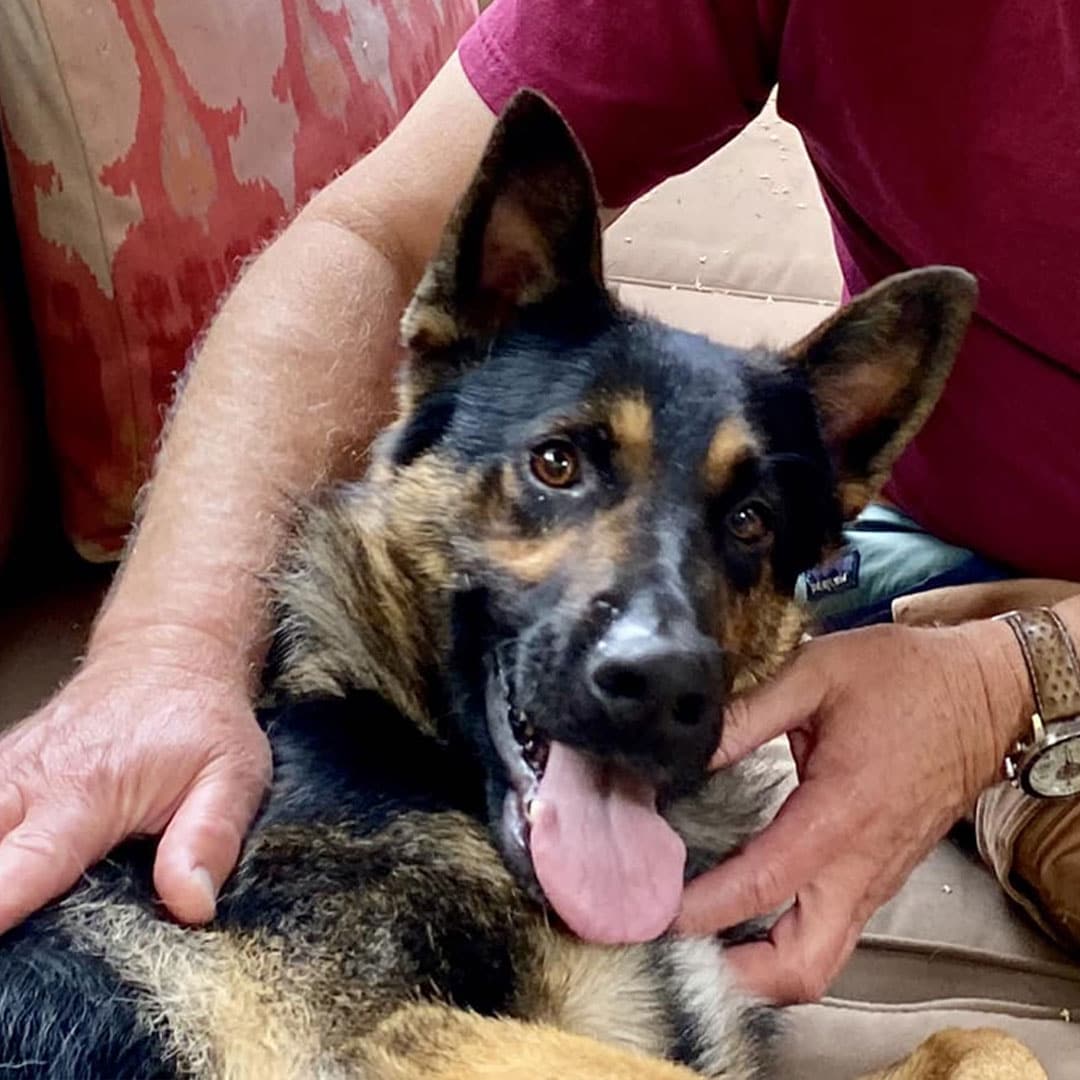
Here’s a look at the ESA candidates who are currently waiting to be matched with someone like YOU! If you’re interested in one of these dogs in particular, please note their name in your ESA application.


Please note: While applicants are encouraged to indicate any animals they feel particularly drawn to, we strive to find the best fit for each family and each ESA candidate. As such, Shelter to Service cannot guarantee that you will be paired with a specific candidate.
ESA Adoption Fees
- Emotional Support Dog – $400
- Emotional Support Cat – $200
Just like in our general adoption program, ESA adoption fees are always waived for U.S. military Veterans.
How Does it Work?
Joybound’s ESAs are dogs and cats who provide emotional support for individuals seeking a companion to help with emotional well-being at home. ESA’s do not provide a specialized service and are treated as pets, except for being exempted from homeowner association rules, weights, limits, or breed specific legislation.
As part of the ESA process, Joybound offers:
- Animals specifically selected by Joybound’s professional service dog trainers.
- A minimum of two specialized training classes after adoption.
- Education and counseling, as well as training to help prepare ESAs and their guardians.
- Evaluation and training of personal pets as ESA candidates.
- Certificate resources (by request).
“My dog’s not just helping me — she’s helping my whole family.”
– David, Shelter to Service Graduate
What is an Emotional Support Animal?
Emotional support animals (ESAs) provide many therapeutic benefits to their guardians. Unlike service animals, emotional support animals do not require specialized task training to provide comfort. Their presence alone brings peace and comfort to their families. Emotional support animals do have access to pet-prohibited housing (thanks to the Fair Housing Act).
Joybound’s ESAs are dogs and cats that provide emotional support for individuals seeking a companion to help with emotional well-being at home. Joybound provides a minimum of two training classes after adoption. ESA’s do not provide a specialized service and are treated as pets.


The companionship of an emotional support animal can help with:
- Providing a consistent source of comfort and emotional stability during stressful or overwhelming situations.
- Reducing feelings of loneliness and isolation by offering unconditional companionship.
- Encouraging routine and responsibility, which can contribute to improved mental wellbeing.
- Offering a sense of security and calm in unfamiliar or triggering environments.
- Supporting social interaction by serving as a bridge to conversations and connection with others.
Meet Pearl
When we’re looking for shelter dogs who could make for excellent ESA candidates, Pearl is exactly the type of dog who comes to mind. She’s calm, patient, cuddly, and always wants to be at her person’s side — or even right on top of them!

Pearl was found as a stray with no collar and no microchip. She was taken to the local municipal shelter, where she was discovered by Joybound shortly after. Our team immediately noted how resilient the 9-pound pup was. Despite being underweight, and covered in densely matted fur, Pearl happily curled up on the lap of anyone she met. Back at Joybound, she received a bath at our Grooming Salon, some basic medical treatment, and a quick stay in the home of a foster volunteer. Before long, she was matched with a new family — not as a regular pet, but as a Shelter to Service emotional support animal.
General Program Eligibility Requirements
Each different type of Shelter to Service service has individual eligibility requirements for applicants. More information is available on their specific program pages. But all applicants must have the following qualifications.
- Applicants must live in a stable, personal residence.
- Applicants must demonstrate willingness and ability to provide proper care and a safe home environment for a dog for their lifespan.
- Applicants must be at least 16 years or older.
- Applicants must submit a copy of their photo ID.
- Applicants must be willing and able to travel by car to our Walnut Creek campus.
Emotional Support Animal FAQs
What is an Emotional Support Animal (ESA)?
An Emotional Support Animal is a companion animal that provides therapeutic benefit to an individual with a diagnosed mental or emotional disability.
Unlike service animals, ESAs are not trained to perform specific tasks. Their support comes from companionship and emotional presence as part of a person’s treatment plan.
What qualifies someone for an ESA?
To legally qualify for an ESA under California and federal law, a person must:
- Have a diagnosed disability that substantially limits one or more major life activities, and
- Receive documentation from a licensed healthcare professional (such as a therapist, psychologist, psychiatrist, or physician)
The healthcare provider must determine that the animal is part of the individual’s therapeutic care.
Can anyone have an ESA?
While any pet can provide comfort and emotional benefit, ESA legal protections apply only to individuals with a diagnosed disability and proper documentation.
Without this, an animal is legally considered a pet, not an ESA.
Does Joybound certify or register ESAs?
No, Joybound People & Pets does not:
- Certify animals as ESAs
- Register ESAs
- Provide ESA letters or documentation
Only a licensed healthcare professional can determine whether an individual qualifies for an ESA.
Can Joybound help me get an ESA letter?
Joybound cannot provide ESA letters or medical documentation.
If someone believes they may qualify for an ESA, they should speak directly with a licensed healthcare provider who knows their medical or mental health history. As of January 2026, ESA letters must be provided by a California-certified mental health professional with at least a 30-day relationship with the patient.
What legal benefits does an ESA have?
Under the Fair Housing Act, a verified ESA may qualify for:
- Reasonable housing accommodations
- Living in housing that otherwise restricts pets
- Waived pet deposits or pet rent
Housing providers may request proper documentation before approving an ESA accommodation.
In the state of California, workplaces must allow employees to bring their ESA to work, unless it creates an “undue hardship” for the company.
Can ESAs be taken to the grocery store, movie theater, restaurant, etc.?
No, emotional support animals do not have public access rights and are not allowed in places where pets are normally prohibited, including:
- Restaurants
- Grocery stores
- Retail shops
- Schools
- Public transportation
Only trained service animals have these protections under the Americans with Disabilities Act (ADA).
Are ESAs allowed on airplanes?
As of 2021, airlines are no longer required to recognize ESAs as service animals.
Most airlines now classify ESAs as pets and require standard pet travel fees and policies.
What is the difference between an ESA and a service animal?
| Service Animals | Emotional Support Animals |
|---|---|
| Trained to perform specific tasks | Provide emotional comfort without training |
| Protected under the Americans with Disabilities Act (ADA) | Not protected under the Americans with Disabilities Act (ADA) |
| Allowed in public places | No public access rights |
| Must be a dog (or miniature horse in limited cases) | Can be many species |
| Requires disability-related task | Requires therapeutic documentation |
Can an adopted Joybound animal become an ESA?
Potentially — but not automatically. Joybound adopts pets as companions, not as designated service or emotional support animals.
If an adopter later qualifies for an ESA through a licensed healthcare provider, their adopted pet may become part of that therapeutic plan, depending on the provider’s recommendation.
What about animals like Pearl featured in Joybound programs?
Animals highlighted through Joybound programs may demonstrate traits that make them wonderful companions — including calm temperaments, affection, or strong human connection.
However, featuring an animal does not mean the animal is certified, registered, or guaranteed to qualify as an ESA. ESA eligibility depends on the adopter’s healthcare provider — not the animal alone.
Why is there so much conflicting information online?
Unfortunately, many websites advertise ESA “registrations” or “certifications” that are not legally recognized under California or federal law. There is no official ESA registry. Only documentation from a licensed healthcare professional is valid.
Joybound People & Pets is committed to:
- Educating adopters with accurate, compassionate information
- Supporting the human-animal bond responsibly
- Protecting adopters, housing providers, and animals through clear communication
If you have questions about adoption, training resources, or how animals support emotional wellbeing, our team is always happy to help.
Shelter to Service FAQs
Where does Shelter to Service get its animals?
Just like Joybound’s general adoptions program, Shelter to Service admits dogs and cats from public shelters to provide relief and give more animals a second chance at a healthy, fulfilling life.
Where is the Shelter to Service program located?
Joybound’s Shelter to Service program is located at Joybound People & Pets’ national headquarters and adoption center at 2890 Mitchell Dr, Walnut Creek, CA 94598. The 7,893 square foot Engelstad Shelter to Service Center is a safe space for handler-dog teams to gather, learn, train, and socialize with group and simulated home training rooms, program offices, kennels, gathering space, and more.
What services does Shelter to Service offer?
Joybound’s Shelter to Service program provides psychiatric service dog matching, facility animal matching, psychiatric service dog training for personal dogs, personalized emotional support animal matching, and the opportunity to learn how to train these types of animals through vocational volunteer foster training.
When will I hear back from Shelter to Service?
After an application has been submitted, our Shelter to Service team should be in touch within one week.
How do I refer someone to the program?
If you know someone who might benefit from an emotional support animal, facility animal, or psychiatric service dog, our team would love to talk to them and help understand their challenges. Interested parties may reach out to [email protected] for more information.
Can I adopt an emotional support animal?
Any animal adopted from Joybound can qualify as an emotional support animal with a letter of recommendation from the adopter’s licensed mental healthcare provider. However, Shelter to Service offers a personalized ESA matching experience which includes some prior foundational training for emotional support dogs.
Can I train my own dog through Shelter to Service?
The Shelter to Service program now offers psychiatric service dog training for personal dogs and their guardians who meet our program’s eligibility requirements (outlined in the Shelter to Service program application).
How do I donate to Shelter to Service?
Donations of any amount make a lifesaving difference for animals and people. Make a secure online donation and direct your gift to the Shelter to Service program, or to donate by mail, please send a check to Joybound People & Pets, 2890 Mitchell Dr., Walnut Creek, CA, 94598.
There are many other ways to donate, including stock, vehicle donations, planned giving, workplace giving, and more.
Other Types of Shelter to Service Animals
Shelter to Service matches participants with psychiatric service dogs, facility animals, and emotional support animals. This personalized matching service connects each applicant with an animal who will complement their lifestyle and help them achieve their goals. Additionally, Shelter to Service now offers psychiatric service dog training for personal dogs.

Psychiatric Service Dogs
Service dogs, including psychiatric service dogs, are trained in specific tasks to assist a person with a disability.

Facility Animals
Facility dogs and cats are trained in specific tasks to work alongside professionals and assist their clients.

Therapy Animals
Therapy animals are certified pets who provide comfort to many people — like the dogs and cats of Joybound’s Pet Hug Pack®!

Assistance Dog Candidates
Candidates work with Joybound’s volunteer foster trainers towards a future as a psychiatric service dog or facility animal.
Get Involved with Shelter to Service
Become a Volunteer Foster Trainer
Volunteer foster trainers make our mission possible.

Make a Gift to Shelter to Service
Your support changes the lives of people and pets alike.

Apply for a Shelter to Service Animal
Start your assistance or support animal journey.
We’re a proud recipient of funding from Maddie’s Fund®.

We feed our animals high-quality Purina pet food.

You can find all our adorable, adoptable animals on Petfinder